
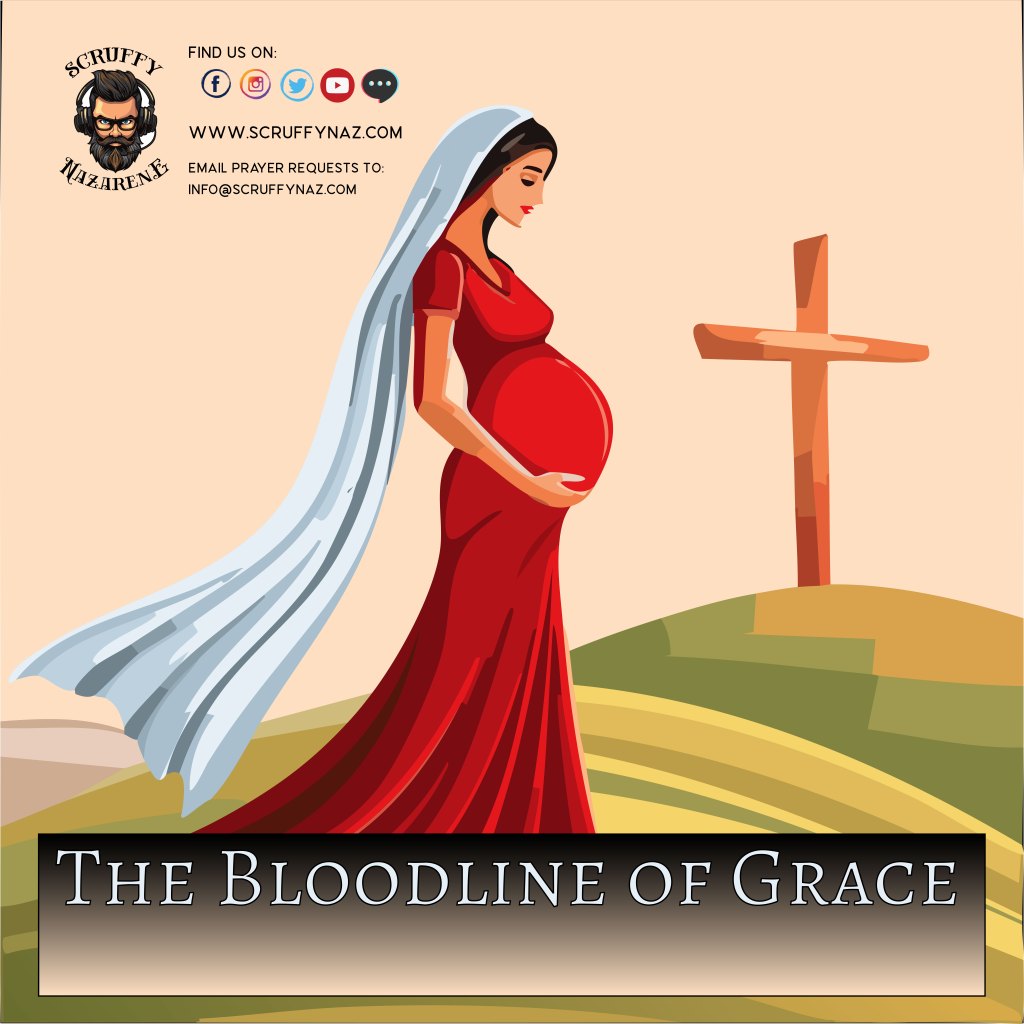
The Bloodline of Grace — Episode 1
The Genealogy and the God of Grace (Matthew 1:1–17, CSB)
Why start with a genealogy?
This “family tree” isn’t filler—it’s the Gospel in miniature: God works through history, includes the outsider, and redeems broken stories.
Main Scripture (CSB): Matthew 1:1–17
1 An account of the genealogy of Jesus Christ, the Son of David, the Son of Abraham:
2 Abraham fathered Isaac, Isaac fathered Jacob, Jacob fathered Judah and his brothers,
3 Judah fathered Perez and Zerah by Tamar, Perez fathered Hezron, Hezron fathered Aram,
4 Aram fathered Aminadab, Aminadab fathered Nahshon, Nahshon fathered Salmon,
5 Salmon fathered Boaz by Rahab, Boaz fathered Obed by Ruth, Obed fathered Jesse,
6 and Jesse fathered King David. David fathered Solomon by Uriah’s wife,
7 Solomon fathered Rehoboam, Rehoboam fathered Abijah, Abijah fathered Asa,
8 Asa fathered Jehoshaphat, Jehoshaphat fathered Joram, Joram fathered Uzziah,
9 Uzziah fathered Jotham, Jotham fathered Ahaz, Ahaz fathered Hezekiah,
10 Hezekiah fathered Manasseh, Manasseh fathered Amon, Amon fathered Josiah,
11 and Josiah fathered Jechoniah and his brothers at the time of the exile to Babylon.
12 After the exile to Babylon: Jechoniah fathered Shealtiel, Shealtiel fathered Zerubbabel,
13 Zerubbabel fathered Abiud, Abiud fathered Eliakim, Eliakim fathered Azor,
14 Azor fathered Zadok, Zadok fathered Achim, Achim fathered Eliud,
15 Eliud fathered Eleazar, Eleazar fathered Matthan, Matthan fathered Jacob,
16 and Jacob fathered Joseph the husband of Mary, who gave birth to Jesus who is called the Messiah.
17 So all the generations from Abraham to David were fourteen generations; and from David until the exile to Babylon, fourteen generations; and from the exile to Babylon until the Messiah, fourteen generations.
Big Idea 1 — God Works Through History
Takeaway: God’s timing isn’t random. Across centuries, He faithfully moves His promises toward Jesus.
Genesis 12:2–3 (CSB)
“I will make you into a great nation… all the peoples on earth will be blessed through you.”
Use after Matt 1:2 (Abraham) to show promise → fulfillment in Christ.
Galatians 4:4–5 (CSB)
“When the time came to completion, God sent his Son…”
Connect to Matthew’s “three fourteens” → God’s perfect timing.
Big Idea 2 — God Includes the Outsider
Takeaway: Matthew highlights women—Tamar, Rahab, Ruth, Bathsheba, and Mary—signaling God’s welcome to outsiders.
Isaiah 56:6–7 (CSB)
“My house will be called a house of prayer for all nations.”
Use after mentioning Rahab (Canaanite) & Ruth (Moabite) to show God’s intent to include the nations.
Big Idea 3 — God Redeems Broken Stories
Takeaway: The line includes sin and scandal, yet God brings the Redeemer through brokenness.
Romans 8:28 (CSB) — “All things work together for the good…”
Reassure after recounting Israel’s failures: God weaves good purposes.
2 Corinthians 5:17 (CSB) — “If anyone is in Christ, he is a new creation…”
Land the application: Jesus makes us new within our story.
Reflection / Group Questions
- Where do you need to trust God’s timing and faithfulness right now?
- Who is an “outsider” you might be invited to see differently?
- How does God’s redemption of broken stories give you hope?
Closing Prayer (read aloud)
Father, thank You for reminding us that You are faithful across the generations, that You never forget Your promises. Thank You that You welcome the outsider, and that no one is too far from Your love. And thank You that You redeem broken stories—even ours. Lord, help us to trust Your timing when life feels uncertain. Help us to see the people around us the way You do, not as outsiders but as beloved children You long to bring home. And help us to believe that no mistake, no sin, no brokenness is beyond Your power to redeem. We give You thanks for Jesus, the Messiah, the fulfillment of this story, and we offer our lives to You in His name. Amen.
 The Scruffy Nazarene